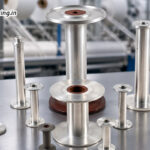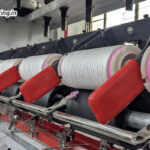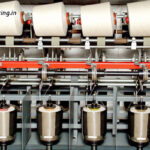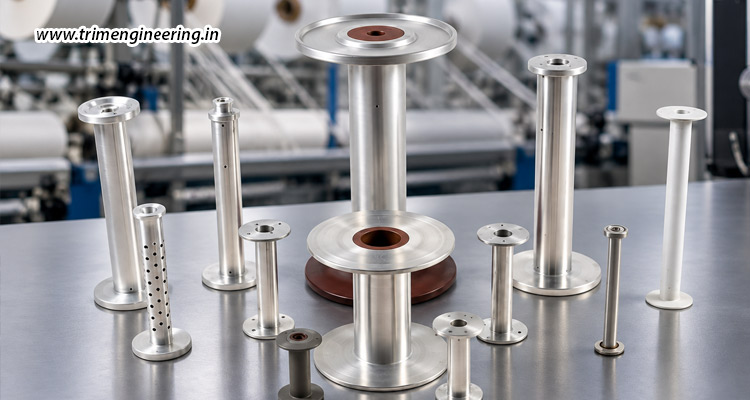
Textile machinery employed in twisting, doubling, winding, and comparable operations frequently operates at elevated speeds over prolonged periods. In these demanding conditions, the bobbin must perform beyond simply storing yarn. Its mass, structural integrity, dimensional precision, and capacity to sustain consistent rotation all influence the machine’s operational reliability. Aluminum bobbins excel in such applications because aluminum delivers minimal weight alongside substantial mechanical strength. This advantageous combination helps minimize the inertial load of rotating components while preserving the structural integrity necessary for uninterrupted operation. In textile machinery where rotational velocity and uniformity are critical, these properties establish aluminum as a fundamental material for bobbin manufacturing.
Why bobbin weight matters at high speeds
During rotation, a bobbin’s mass becomes a significant factor in the operational performance equation. A heavier rotating element demands increased energy to accelerate, decelerate, and sustain at the target speed. It can also impose heightened stress on the machine’s propulsion mechanism and rotational assembly. Aluminum exhibits relatively low density in comparison to numerous other industrial metals. Incorporating it into bobbin manufacturing enables the creation of a lighter component while retaining the fundamental strength necessary for industrial applications. This advantage becomes especially pronounced when equipment operates at elevated rotational speeds. A lighter bobbin can decrease the total rotating mass the machine must manage, facilitating more efficient acceleration and deceleration. This proves advantageous in scenarios where production rates fluctuate regularly or where exacting speed regulation is essential.
The strength-to-weight advantage of aluminum
Weight reduction alone does not qualify a material as appropriate for a bobbin. The component must also resist the mechanical stresses that develop during use. A bobbin with inadequate strength may experience deformation or loss of dimensional stability, which can compromise its performance within the machine and its interaction with processed materials. Aluminum provides an effective equilibrium between lightness and strength. Its favourable strength-to-weight ratio enables manufacturers to create bobbins that are relatively light in mass while preserving the structural durability required for sustained industrial applications. This balance proves especially valuable in high-speed textile equipment. The goal is not to minimize bobbin weight at all costs, but rather to establish the optimal balance of weight, strength, dimensions, and stiffness for the intended use.
How lower rotating mass supports high-speed operation
High-speed rotation imposes persistent stress on rotating elements. As rotational velocity rises, even minor inconsistencies in mass distribution or equilibrium become increasingly significant. An aluminum bobbin with reduced mass can lower the total rotating mass of the system. When paired with precise manufacturing processes and appropriate balancing procedures, this reduction can enhance rotational stability and control. This advantage becomes particularly pronounced during the acceleration phase. The machine must accelerate the bobbin to its target speed, and a lighter component demands less rotational force than a heavier alternative. Conversely, during deceleration, lower rotating mass facilitates smoother speed transitions. Nevertheless, the material itself is insufficient to ensure reliable high-speed performance. Bobbin design, manufacturing precision, balance quality, installation method, equipment condition, and machine settings all remain critical factors.
Aluminum bobbins and rotational stability
Rotational stability becomes increasingly critical at elevated speeds. An unbalanced bobbin can generate undesirable movement or vibration, especially as rotational velocity increases. Aluminum’s reduced weight offers significant advantages when designing bobbins intended for rapid rotation. However, achieving stable rotation requires equally rigorous manufacturing precision. Precise dimensional tolerances and accurate machining are essential to preserve the bobbin’s intended geometry. Critical components including the bore, flange, and overall profile must align precisely with the equipment in which the bobbin will be installed. Consequently, aluminum delivers optimal performance only when its material benefits are paired with meticulous manufacturing standards. A lightweight bobbin lacking proper balance will not deliver the anticipated advantages of high-speed operation.
Aluminum bobbins for continuous textile operations
Textile manufacturing typically requires extended operational periods. Bobbins may operate under continuous rotation while processing yarn and similar materials, making resilience a critical factor. Aluminum delivers an effective balance of lightweight design and structural integrity for these demanding applications. Its inherent corrosion resistance proves advantageous in settings where components encounter moisture or other environmental factors that could compromise materials with lower corrosion resistance. The goal is to sustain uniform functionality across numerous operational cycles rather than merely achieving elevated speeds for brief intervals. An effective bobbin must preserve its dimensional stability and operational properties throughout its entire working period. When aluminum is properly chosen and processed for the intended use, its material characteristics can fulfill this objective while avoiding excess rotational mass.
Managing heat during high-speed operation
High-speed equipment generates thermal energy through friction, bearing systems, motors, and additional moving parts. The operational setting surrounding a bobbin may therefore experience significant temperature elevation, particularly during uninterrupted production runs. Aluminum exhibits excellent thermal conductivity, enabling efficient heat dissipation. This characteristic proves valuable in components functioning in environments where thermal management represents a significant consideration. For an aluminum bobbin, thermal behaviour should be evaluated as an integral component of the broader machinery system rather than as an independent characteristic. Thermal generation is influenced by elements including rotational velocity, bearing performance, interfacing surfaces, equipment configuration, and operational circumstances. Regardless, aluminum’s thermal conduction capability represents an additional material benefit when both reduced weight and sustained operation are essential design priorities.
Why precision manufacturing matters
High-speed machinery provides minimal tolerance for dimensional deviations, imbalance, or poor surface quality. Precision machining enables the production of uniform bore dimensions, flange profiles, outer diameters, and other essential specifications. Consistency becomes critical when several bobbins operate simultaneously on the same production line. Accurate manufacturing also supports proper bobbin alignment on the machine, helping minimize unwanted movement caused by dimensional discrepancies or improper installation. A high-speed aluminum bobbin’s effectiveness depends on the combination of its material characteristics and manufacturing accuracy. For applications requiring precisely manufactured aluminum bobbins, working with an experienced ALUMINUM BOBBIN manufacturer in India can help ensure consistent dimensions, reliable fit, and dependable performance. Trim Engineering manufactures aluminum bobbins to meet specific machinery and application requirements, with attention to precision, durability, and suitability for high-speed textile operations.
Factors to consider when selecting aluminum bobbins
Selecting an aluminum bobbin for high-speed machinery requires more than verifying the material composition. The bobbin must be compatible with the machine and tailored to the particular production application. Key factors include:
- Operating speed: The bobbin must be suitable for the designated rotational velocity.
- Dimensions: Bore diameter, length, outer diameter, and flange measurements must align with machinery specifications.
- Balance: Precise balance is essential for high-speed rotation.
- Strength: The construction must endure the physical stresses of prolonged operation.
- Machine compatibility: The bobbin must install securely and function optimally with the applicable equipment.
- Application: Twisting, doubling, winding, rope, and cable operations may have distinct specifications.
- Manufacturing precision: Uniform machining ensures dependable fit and rotational stability.
- Operating environment: Thermal conditions, humidity levels, and other environmental circumstances warrant evaluation.
These factors work together to ensure that aluminum’s lightweight properties deliver tangible operational benefits rather than serving as a mere material characteristic.
Aluminum bobbins prove suitable for high-speed textile machinery through a synergistic combination of material properties and manufacturing excellence. The material’s relatively low density reduces the rotating mass in the system, while its inherent strength delivers the structural integrity required for intensive applications. Additional benefits emerge from its superior thermal conductivity and corrosion resistance, which prove invaluable in environments demanding continuous operation under challenging conditions. Nevertheless, achieving high-speed performance requires more than material selection alone. Dimensional precision, dynamic balance, thoughtful engineering, secure installation, and meticulous manufacturing processes are equally critical. When integrated comprehensively, aluminum establishes a robust and reliable foundation for bobbins deployed across high-speed twisting, doubling, winding, rope, and cable machinery applications.