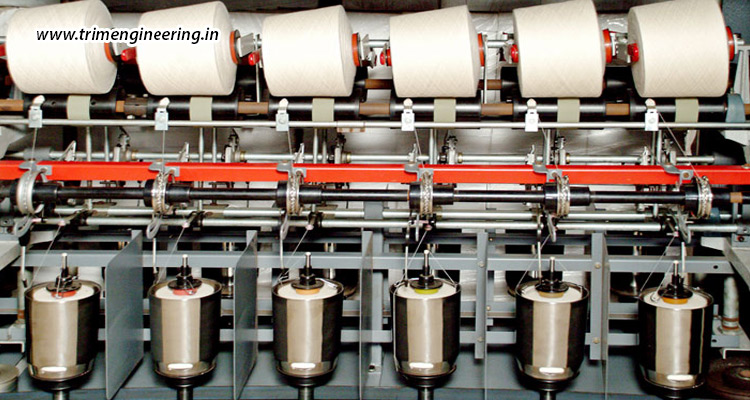
The textile industry has evolved with advanced machinery, automation, and precision engineering to meet the demand for stronger and more consistent yarn. Among modern manufacturing technologies, Two-For-One (TFO) twisting plays a crucial role in achieving high productivity and superior yarn quality. TFO cops, though small in size, are essential components that ensure smooth yarn unwinding, stable tension, and efficient twisting performance. Their precision design, material quality, and dimensional accuracy directly influence machine efficiency and final yarn properties. The blog explores how TFO cops support high-speed yarn twisting and their importance in modern textile production, while highlighting the engineering behind their reliable performance in demanding industrial applications.
Why high-speed twisting requires specialized components
Yarn twisting combines one or more strands of yarn by rotating them around each other, increasing the yarn’s strength, cohesion, elasticity, uniformity, and abrasion resistance; making them essential for weaving, knitting, embroidery, and other similar applications. One of the most common twisting method is the Two-For-One (TFO) twisting, which inserts two twists into the yarn during every spindle revolution. But, TFO machines operate at thousands of revolutions per minute! At such high speed, even the smallest inconsistency can lead to yarn breakage or uneven twisting. Extreme precision is thus absolutely critical here. Every component that comes into contact with the yarn must be designed with exceptional precision to maintain smooth yarn flow, consistent tension control, and uninterrupted production efficiency throughout the twisting process.
How TFO cops enable efficient yarn twisting
The TFO cop is a critical component, specially designed to hold the yarn package and ensure controlled unwinding during twisting. The quality of the TFO cop directly affects the yarn feeding consistency, twist uniformity, and final yarn quality. In high-speed twisting applications, a well-designed TFO cop acts as the foundation for stable and uninterrupted yarn processing.
- Supporting high-speed machine performance
During high-speed operation, TFO cops experience significant mechanical stress caused by rotation and centrifugal forces. If the cop lacks structural strength or balance, it can result in uneven yarn delivery, reduced production efficiency, and increased component wear. Precision-manufactured TFO cops maintain stability during operation by ensuring accurate dimensions and proper weight distribution. Their ability to maintain shape under high-speed conditions allows machines to operate efficiently with minimal interruptions. This stability is particularly important in large-scale textile production, where even small performance issues can lead to significant production losses.
- Smooth yarn unwinding and tension control
During the twisting process, the yarn must leave the cop at a consistent speed and tension. Any irregularity during this stage can create defects in the twisted yarn. One of the most important functions of a TFO cop is enabling smooth yarn unwinding. A properly engineered TFO cop ensures that the yarn moves smoothly from the package into the twisting zone without unnecessary friction or resistance. This prevents yarn snarling, uneven twist distribution, yarn breakage, and sudden tension fluctuations. Excessive tension can weaken the yarn, while insufficient tension can result in poor twist formation. The precision design of TFO cops helps maintain the balance required for consistent yarn quality.
- Reducing yarn breakage and improving quality
Yarn breakage is one of the major challenges faced during twisting operations. Every yarn break results in machine stoppage, production delays, and additional labour requirements. TFO cops help reduce breakage by providing smooth yarn release consistent tension control, reliable yarn support, and reduced friction. When yarn flows smoothly from the cop, the twisting process becomes more stable. This improves the uniformity of twist insertion and enhances the overall quality of the finished yarn.
Engineering principles behind high-performance TFO cops
High-performance TFO cops are the result of advanced engineering focused on precision, durability, and reliability. Their design involves careful consideration of dimensions, material properties, surface finish, and structural stability to withstand high-speed twisting operations. Every engineering aspect plays a crucial role in ensuring smooth yarn delivery, minimizing operational issues, and maintaining consistent performance in demanding textile manufacturing environments.
- Material selection and durability
The material used must be able to withstand repeated use, high rotational speeds, and continuous mechanical stress without losing its shape or performance characteristics. Most commonly, high-quality engineering polymers are used as they provide high mechanical strength, dimensional stability, and long service life, while maintaining a lightweight construction.
- Precision design and dimensional accuracy
The dimensions of a TFO cop should be precise; even minor variations can affect yarn movement and machine operation. The overall geometry of the cop must provide strength; a perfectly balanced cop supports smooth rotation at high speeds. For instance, a consistent diameter ensures uniform yarn unwinding, and a smooth surface minimizes friction and prevents damage to the yarn during unwinding.
- Maintaining stability at high rotational speeds
High-speed twisting generates considerable rotational forces; any imbalance in the cop here can negatively affect machine performance. A TFO cop is thus required to maintain structural integrity, rotational balance, and consistent performance throughout the operation. The ability to perform reliably under demanding conditions makes precision TFO cops essential for modern high-speed textile manufacturing.
Choosing the right TFO cops for your application
Selecting the right TFO cop depends on several factors, including yarn type, machine specifications, production speed, and application requirements. Manufacturers should first and foremost consider the cop’s compatibility with TFO twisting machines. Along with that, other important considerations include material quality, required dimensions, operating conditions, and expected durability. Since different yarn applications have unique processing requirements, the selection of TFO cops must be aligned with the specific characteristics of the yarn being twisted. For instance, for fine yarns, smooth surface finishing and precise tension control are especially important. Similarly, for industrial and technical yarns, higher strength and durability may be required. As a trusted TFO COPS manufacturer in India, Trim Engineering provides precision-engineered cops designed to meet diverse textile applications, offering excellent dimensional accuracy, durability, and reliable performance for high-speed yarn twisting operations. Choosing the correct TFO cop ensures better machine performance, reduced downtime, and improved overall productivity.
High-speed yarn twisting relies on accuracy, stability, and regulated yarn movement. While contemporary TFO machines offer enhanced twisting functions, the effectiveness of the process is significantly influenced by auxiliary components like TFO cops. TFO cops play a vital role in ensuring smooth yarn unwinding, maintaining consistent tension, supporting high rotational speeds, and minimizing yarn breakage, all of which are crucial for achieving uniform yarn quality and efficient production. As textile manufacturers increasingly seek faster production rates, improved quality, and lower operational expenses, the importance of precisely engineered TFO cops will continue to rise. A well-crafted TFO cop is a crucial component that underpins the reliability, productivity, and quality benchmarks of contemporary yarn twisting processes.