Textile machinery is often designed around specific production requirements rather than a universal operating standard. Differences in spindle dimensions, yarn characteristics, winding requirements, rotational speeds, and package sizes can make standard bobbins unsuitable for specialized applications. Custom bobbins are therefore developed to match the machine and process more precisely. Used in twisting, doubling, braiding, rope manufacturing, and cable twisting, industrial bobbins must provide reliable yarn handling throughout production. Customization involves more than changing dimensions; it considers material, geometry, machine compatibility, operating conditions, and performance requirements together. This article explores how custom bobbins are designed for specialized textile machinery and the advantages they offer in demanding applications.
Why standard bobbins may not always be suitable
Standardized bobbins are practical when machine specifications and yarn requirements fall within commonly used dimensions. However, textile machinery varies across manufacturers, models, and applications. Spindle bore requirements, available machine space, and bobbin dimensions can all differ. Yarn characteristics also influence performance, as fine, heavy, synthetic, and specialized yarns may require different levels of package stability and yarn control. Operating speed is another consideration. At higher rotational speeds, dimensional accuracy and dynamic balance become increasingly important, as even minor inconsistencies can contribute to vibration or instability. Custom bobbins address these challenges by allowing dimensions, geometry, and other design features to be developed around the specific machine, yarn, and operating conditions.
When custom bobbins should be considered?
Customization is worth considering when a standard bobbin does not provide the required combination of fit and performance. Some common situations include:
- The machine requires non-standard spindle or bore dimensions
- A particular yarn requires a specialized package configuration
- Available bobbins do not fit within the machine’s dimensional limitations
- The production process operates at demanding rotational speeds
- Specific flange or perforation arrangements are required
- A particular material is needed for weight, strength, or durability considerations
- Existing machinery requires a bobbin that is no longer readily available in a standard configuration
In such circumstances, customization can provide a practical way of addressing the specific requirements without compromising the broader production setup.
What makes a bobbin “custom”?
A custom bobbin is designed around the specific requirements of a textile machine rather than relying on a standard configuration. Its overall geometry can be modified to achieve the required fit, yarn handling, and winding performance. Barrel design is important because its diameter, length, and profile influence how the yarn package is formed and supported. Similarly, flange configuration can be adapted according to the available machine space and package dimensions. These elements are considered together to create a bobbin that matches the intended application. Custom designs may also be developed according to customer drawings or specific machine requirements. The design may also account for operating speed and rotational stability to support consistent performance during continuous operation. This approach helps ensure that the bobbin functions effectively within the specific textile process.
Key design considerations for custom bobbins
Custom bobbin design requires careful consideration of machine compatibility, material, geometry, perforations, dimensions, and precision to ensure reliable performance in specialized applications.
- Perforations for specific machine and yarn requirements
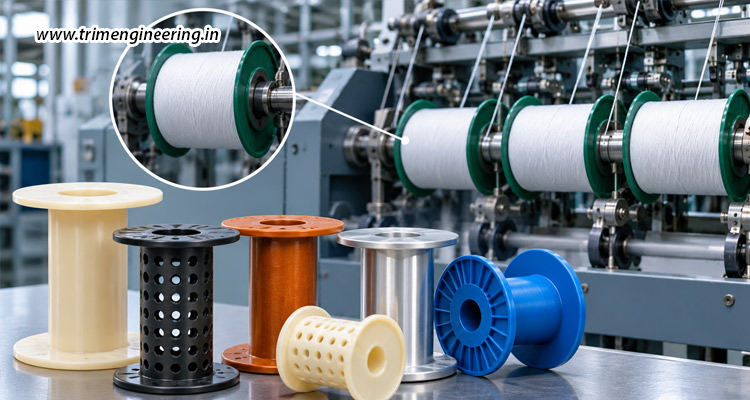
Perforations can be incorporated when a machine or yarn-handling application requires a specific design. Their number, size, and arrangement can be determined according to operating requirements. Perforations may also help reduce bobbin weight while maintaining functionality. However, the design must retain sufficient structural strength, dimensional stability, and reliability throughout the textile process.
- Material selection in the custom bobbin design process
Material selection depends on the bobbin’s required strength, weight, durability, operating conditions, and construction. Materials such as plastic, nylon, phenolic, and aluminium may be considered for different applications. Each offers distinct characteristics affecting performance and suitability. Material choice should therefore be evaluated alongside dimensions and geometry to maintain reliable machine compatibility.
- Machine compatibility, dimensions and precision
Machine compatibility requires accurate consideration of the bobbin’s outer diameter, bore diameter, length, and flange dimensions. These must correspond with the spindle, available machine space, and operating conditions. Precision is particularly important at higher speeds, where dimensional variations can contribute to vibration. Accurate dimensions and suitable balance support stable rotation and consistent yarn handling.
Designing custom bobbins for specific machine and yarn requirements
Custom bobbin design brings together machine specifications, yarn characteristics, operating conditions, and manufacturing requirements to achieve reliable performance.
- Understanding machine requirements
The first step is understanding the machine on which the bobbin will operate. Bore dimensions must match the spindle for proper alignment, while outer diameter and length must suit available space. Operating speed also influences balancing and structural requirements. These factors help ensure smooth rotation, stability, and compatibility during continuous operation.
- Accounting for yarn characteristics
Yarn characteristics significantly influence bobbin design and performance. Thickness, weight, flexibility, surface properties, strength, and winding behaviour can affect package formation and unwinding. Heavier yarns may require greater structural strength, while finer yarns can require smoother surfaces and controlled winding. Custom geometry allows these requirements to be incorporated for consistent yarn handling.
- Developing the custom bobbin
Once machine and yarn requirements are established, the custom bobbin can be developed around the specified dimensions and performance needs. Drawings, samples, spindle measurements, yarn specifications, and operating conditions can guide the design. Bore, barrel, flange configuration, outer dimensions, material, and balance are evaluated together before production to ensure suitability.
Choosing a suitable custom bobbin manufacturer
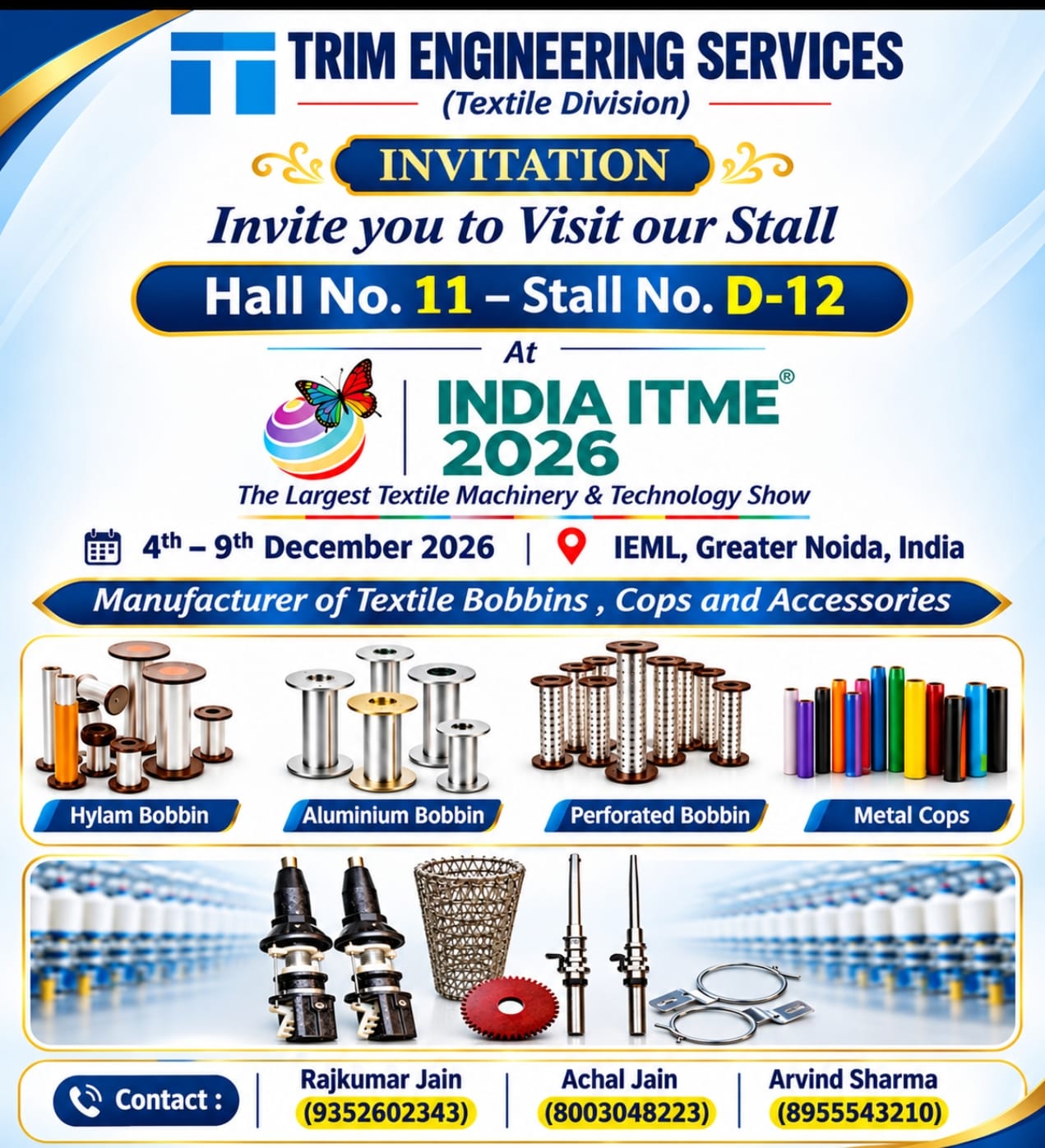
The success of a custom bobbin depends not only on the design but also on the manufacturer’s ability to translate technical requirements into a precise finished component. Experience with different materials, bobbin configurations, textile machinery, and industrial applications can be particularly valuable. Manufacturers should consider whether the supplier can provide different bobbin types, work from drawings or samples, accommodate specialized dimensions, and maintain consistent quality across production quantities. For businesses requiring application-specific solutions, an experienced BOBBIN manufacturer in India like Trim Engineering can provide options including flange bobbins, double flange bobbins, perforated bobbins, aluminium bobbins, nylon bobbins, phenolic bobbins, and customized designs suited to different textile machinery and yarn-handling requirements.
Custom bobbins are valuable when standard components cannot adequately meet the requirements of specialized textile machinery. Their design brings together machine compatibility, yarn characteristics, geometry, material selection, and rotational requirements within a single engineered component. From adjusting bore and barrel dimensions to developing specific flange configurations or perforation patterns, customization allows bobbins to suit the actual production environment. This can support smoother yarn handling, stable rotation, reliable package formation, and consistent machine performance. For specialized textile applications, a custom bobbin should therefore be viewed as an engineered part of the production system, designed to create a reliable connection between the yarn and machinery.