In industrial embroidery, achieving uniform stitch quality relies on more than just advanced machinery and high-quality thread. A small yet crucial element that significantly influences embroidery performance is the bobbin. In Allidhra embroidery machines, choosing the right bobbin can enhance stitch accuracy, minimize machine downtime, and facilitate seamless high-speed operation. Issues like thread breakage, inconsistent tension, skipped stitches, and erratic designs often stem from improper bobbin selection. Nevertheless, bobbins are often neglected during machine setup and maintenance. Selecting the right bobbin necessitates an understanding of various factors, including size, material, compatibility, and thread type. For businesses engaged in high-volume embroidery production, the choice of bobbin is not merely a technical aspect; it is a vital decision that affects operational efficiency and the quality of the final product.
Understanding the role of a bobbin
A bobbin is responsible for holding the lower thread utilized in embroidery stitching. It collaborates with the upper needle thread to form lockstitches via the rotary hook mechanism. During operation:
- The needle threads the upper thread through the fabric.
- The rotary hook captures the loop of the upper thread.
- The bobbin thread intertwines with the upper thread.
- Both threads tighten to create the stitch.
This entire process occurs at incredibly high speeds in Allidhra embroidery machines. Consequently, the bobbin must dispense thread smoothly and consistently, maintaining stable tension.
The importance of bobbin selection in Allidhra machines
Allidhra embroidery machines are engineered for precision, speed, and multi-head functionality. These machines run continuously for extended production periods, making every component essential for stability and consistency. The bobbin directly contributes to:
- Maintaining lower thread tension
- Facilitating proper stitch formation
- Minimizing thread interruptions
- Ensuring smooth machine operation
- Enhancing embroidery consistency across multiple heads
An unsuitable bobbin can disrupt thread flow and adversely impact embroidery quality, especially in intricate or high-density designs, which makes it very important to choose the most fitting bobbin for the Allidhra machine.
How bobbin quality influences stitch quality
Bobbins of inferior quality frequently lead to operational difficulties that adversely affect embroidery results.
Common problems associated with poor bobbins
- Inconsistent thread tension
- Thread breakage
- Bird nesting
- Irregular stitch formation
- Excessive machine vibration
On the other hand, the right bobbins guarantee minimized machine stoppages, accelerated embroidery cycles, reduced thread wastage, smooth thread release, and consistent stitching.
Key factors to consider when choosing the right bobbin
- Bobbin size
Bobbin size is one of the most important factors in embroidery machine compatibility. Different embroidery machines are designed to accommodate different bobbin dimensions. Using the wrong size may lead to poor tension balance, thread jam, uneven stitching, and increased wear on machine components. Allidhra machines typically require industrial embroidery bobbins designed for high-speed performance. Before selecting a bobbin, operators should always verify machine specifications and bobbin size recommendations. Doing so can help with proper thread release, smooth rotation of the bobbin inside the bobbin case, and stable stitch formation.
- Bobbin material
Bobbins are generally available in plastic and metal. Each material offers different advantages depending on production requirements. Plastic bobbins are lightweight and widely used in embroidery operations. They are very light in weight and cost-effective, suitable for standard embroidery production and moderate-speed operations. However, these bobbins may warp or develop cracks over time, which will require frequent bobbin replacements. Metal bobbins are more durable and stable, with better dimensional stability. They have a long operational life, requiring minimal replacements, making them suitable for high-speed operations, continuous usage, and heavy-duty embroidery productions.
- Winding type
Choosing between pre-wound and self-wound bobbins depends on operational priorities. Pre-wound bobbins are pre-filled bobbins with thread, ready for immediate installation, which means faster production setup. The threads here have uniform tension with reduced winding errors, thus improving consistency. These bobbins are best for high-volume embroider, continuous production environments, and multi-head Allidhra machines. Self-wound bobbins, on the other hand, are manually wound using a bobbin winding machine. These helps with flexible thread selection and custom winding control. These bobbins are best for smaller embroidery setups, specialized thread requirements, and businesses managing varied embroidery projects.
- Compatibility with Allidhra machines
Compatibility is critical when selecting bobbins for Allidhra embroidery machines. Not every industrial bobbin fits every embroidery machine model. Even if dimensions appear similar, differences in design tolerances can affect thread tension, rotation stability, stitch consistency, and machine performance. It is thus important to choose a machine-compatible bobbin so as to maintain proper tension balance, prevent bobbin wobbling, and ensure accurate stitch formation. Using incompatible bobbins may result in repeated thread breaks, skipped stitches, and inconsistent embroidery quality across machine heads.
- Bobbin thread type
The type of thread used inside the bobbin also affects embroidery quality and machine performance. Bobbin thread differs from upper embroidery thread because it is usually finer, designed for smooth tension control, and optimized for high-speed stitching. Selecting the correct bobbin thread improves stitch balance, design clarity, and thread efficiency. The two common thread types used are cotton and polyester. Cotton threads have a natural texture and result in soft stitching finish, while polyester threads have high strength and excellent durability, resulting in minimal breakage. Polyester threads are often more used in industrial embroidery due to the durability required at high speeds.
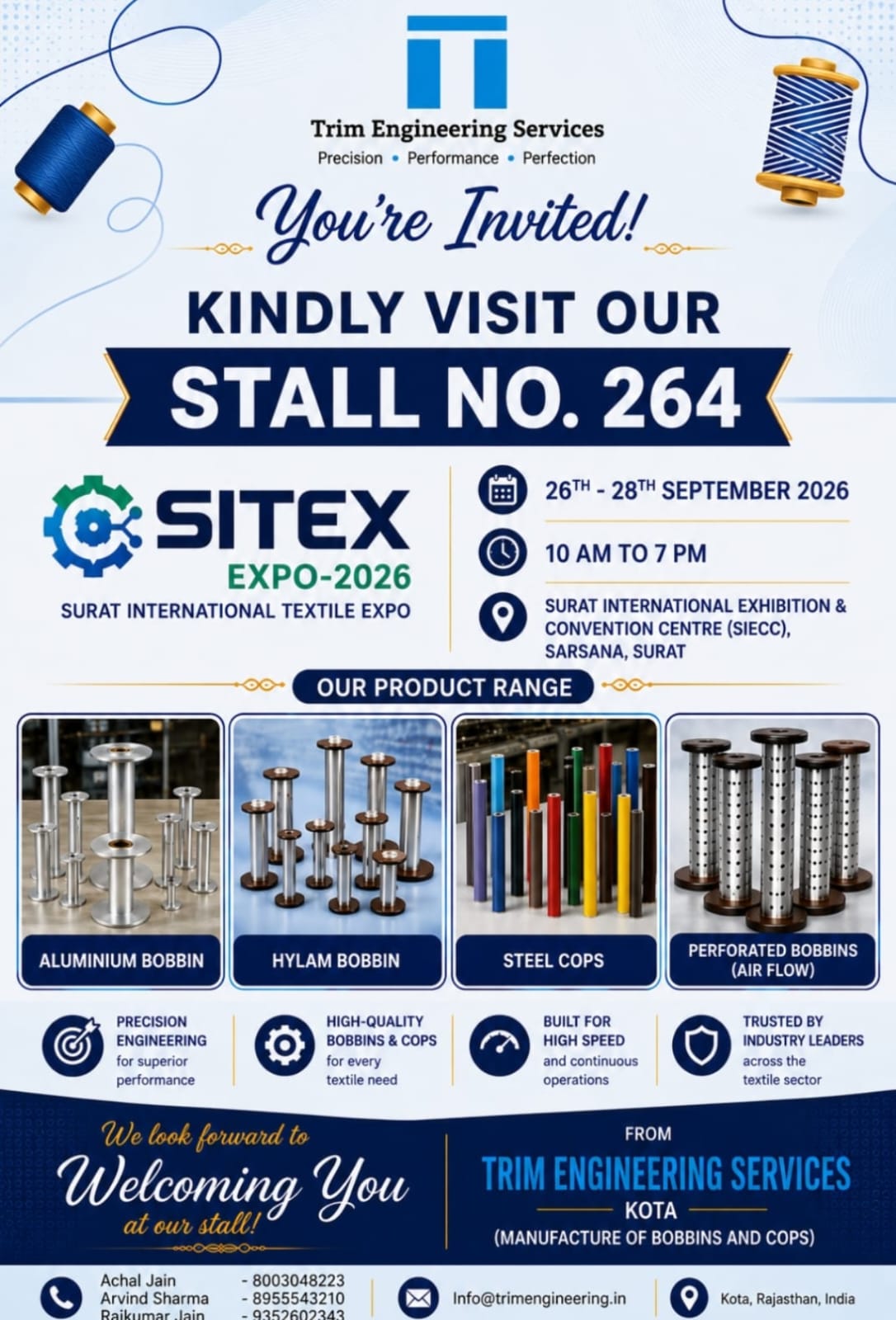
NOTE: Choosing a trusted supplier is equally important, and Trim Engineering, a reliable ALLIDHRA MACHINE BOBBIN manufacturer in India, provides precision-engineered bobbins designed for compatibility, smooth thread flow, and consistent embroidery performance.
Best practices for bobbin selection
Selecting the right bobbin is essential for maintaining embroidery quality, ensuring smooth machine operation, and reducing production issues in Allidhra embroidery machines. The most common best practices include:
- Selecting compatible bobbins
- Choosing high-quality bobbins
- Matching bobbin thread with fabric type
- Inspecting bobbins regularly
- Storing bobbins properly
Signs you might be using the wrong bobbin
Operators should be vigilant for signs that suggest bobbin incompatibility or subpar quality. The warning signs include:
- Frequent breaks in the lower thread
- Uneven stitches
- Looped thread beneath the fabric
- Bobbin wobbling within the case
- Excessive lint build-up
- Irregular tension adjustments
Ignoring these warning signs can result in production delays and substandard embroidery output.
Selecting the right bobbin for your Allidhra embroidery machine is crucial for producing high-quality embroidery and ensuring efficient production. Key factors such as bobbin size, material, compatibility, and thread type significantly influence machine performance and stitch consistency. Whether you opt for plastic or metal bobbins, pre-wound or self-wound varieties, the primary goal should always be to achieve smooth thread flow, balanced tension, and dependable machine operation. High-quality bobbins that are compatible with your machine not only enhance stitch accuracy, but also minimize downtime, maintenance challenges, and production setbacks. In fast-paced embroidery settings, making the right bobbin selection is a worthwhile investment in productivity, consistency, and long-term operational success.