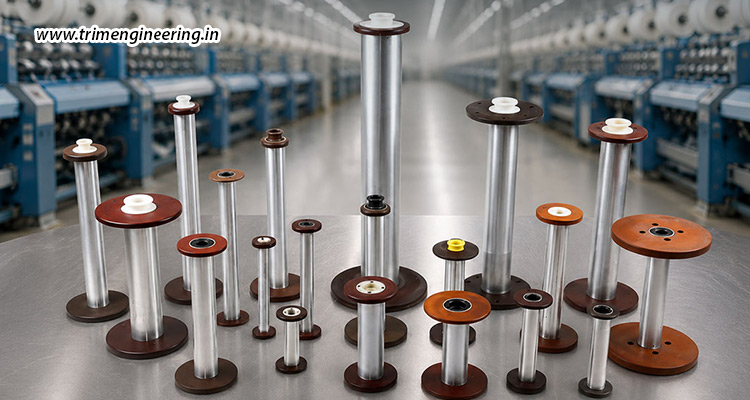
In the textile industry, where precision, speed, and consistency are crucial for success, even the tiniest components play a vital role, with industrial bobbins being one such element. Bobbins act as the backbone for yarn management throughout the processes of twisting, doubling, braiding, rope making, and cable manufacturing. This makes these meticulously designed components very important to consider, as they determine both the production efficiency and yarn quality. Gaining a clear understanding of how bobbins are manufactured, how they perform throughout their service life, and when they should be reused or replaced enables manufacturers to make informed decisions that enhance performance, streamline maintenance, and maximize long-term operational value. The blog below explores each stage of a bobbin’s lifecycle in depth, emphasizing durability and identifying the right time for replacement in high-demand production settings.
The role of industrial bobbins in textile processes
Industrial bobbins are cylindrical or spool-shaped elements designed to hold, store, and dispense yarn during manufacturing operations. They are affixed to machine spindles, and function at high velocities, while maintaining controlled yarn tension. Their performance is vital in the applications of:
- Yarn twisting and doubling
- Rope yarn production
- Cable twisting processes
- Tire cord manufacturing
- Processing of jute, silk, and synthetic fibres
Due to the nature of these applications, which involve continuous movement, high rotational speeds, and fluctuating yarn loads, bobbins must be dimensionally precise, structurally robust, and dynamically balanced to guarantee smooth unwinding and consistent output.
Stage 1: Design considerations and material selection
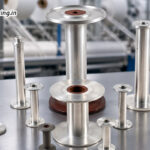
Industrial bobbins are engineered based on specific machine requirements, yarn types, and operational conditions. Several parameters are carefully defined to plan a proper design, such as the dimensions, geometry, and balance. The dimensions of outer diameter, bore diameter, and length must be carefully determined based on machine specifications and yarn requirements, while flange design, barrel profile, and perforations are optimized accordingly to ensure performance and stability. Additionally, proper dynamic balance must be maintained to ensure stable rotation at high speeds. The material chosen also plays a very vital role in determining the durability and performance of the bobbin in the specific application. Based on strength, weight, and durability requirements, the material can be chosen from a wide range that includes nylon, engineered plastic, aluminium, and phenolic materials. The choice of material depends on factors like machine speed, yarn type, and environmental conditions. For instance, nylon and engineered plastics are chosen when lightweight materials are required, but with impact resistance; aluminium is best valued for its strength-to-weight ratio and resistance to wear; while phenolic materials are known for their rigidity and thermal stability.
Stage 2: Precision manufacturing
After the materials are decided upon, and the design is in place depending upon the application, the bobbins are then manufactured using precision processes like moulding or machining. High accuracy is important during manufacturing these components to ensure smooth surface finish, uniform weight distribution, and a perfect spindle fit. These qualities are critical for maintaining consistent yarn tension and preventing vibration during operation.
Stage 3: Installation and initial operation
After manufacturing, bobbins are introduced into the production environment. Proper installation is the first step in ensuring optimal performance. There must be proper fit and alignment; the bobbin must fit securely onto the spindle, without excessive tightness or looseness. An improper fit may cause uneven yarn tension, wobbling during rotation, and increased wear on machine components. When the bobbin is first used, it may undergo a settling period to adapt to the machine conditions. This is when operators must monitor rotation stability, yarn winding patterns, and surface interaction with the yarn. Any irregularities at this stage can indicate dimensional or balance issues, which must be treated right away.
Stage 4: Active service life
Once set, the bobbin is then ready for use. During its operational life, the bobbin is subjected to continuous mechanical and operational stress. There are high rotational speeds, continuous yarn tension, exposure to heat and friction, and repeated loading and unloading cycles. These conditions gradually affect the bobbin’s structural integrity and performance. However, a high-quality bobbin is expected to maintain dimensional stability over time and provide consistent yarn tension. It is required to resist wear and deformation, and operate without causing vibration. The ability to meet these expectations determines the overall efficiency of textile production.
Stage 5: Wear and degradation
Over time, even the most durable bobbins begin to show signs of wear. Understanding these signs is crucial for preventing production issues. You must check for surface wear, dimensional changes, cracks, structural damage, and loss of balance. Repeated contact with the yarn can cause abrasion, leading to rough surfaces that may damage the fibres. Moreover, continuous stress can alter the shape and size of the bobbin, affecting its fit as well as the balance. Prolonged stress or strong mechanical impact can further damage the structural integrity of the bobbin, leading to cracks or breakage. All these issues can lead to inconsistent yarn tension, increased yarn breakage, and reduced product quality. It is thus crucial to check for any signs of wear regularly, and take the required actions immediately to maintain operational efficiency. To ensure longevity, regular cleaning and inspection are important. Also, the bobbins must be kept in controlled environments to prevent material degradation, and must be handled with care, avoiding impact damage during loading and unloading.
Stage 6: Reuse or replacement?
Once the bobbins have degraded, it is time to take action. While bobbins are generally designed for repeated use, it is important to understand when they must be replaced for a new one. As long as the structural integrity remains intact, the surface condition does not damage yarn, and balance and alignment are maintained, reuse can be considered. However, if there are any visible cracks or structural defects, or rough surfaces, or if it fits poorly over the spindle, it is time to replace the bobbin with a new one. Vibration or frequent yarn breakage also indicate bobbin-related issues, which calls for a replacement.
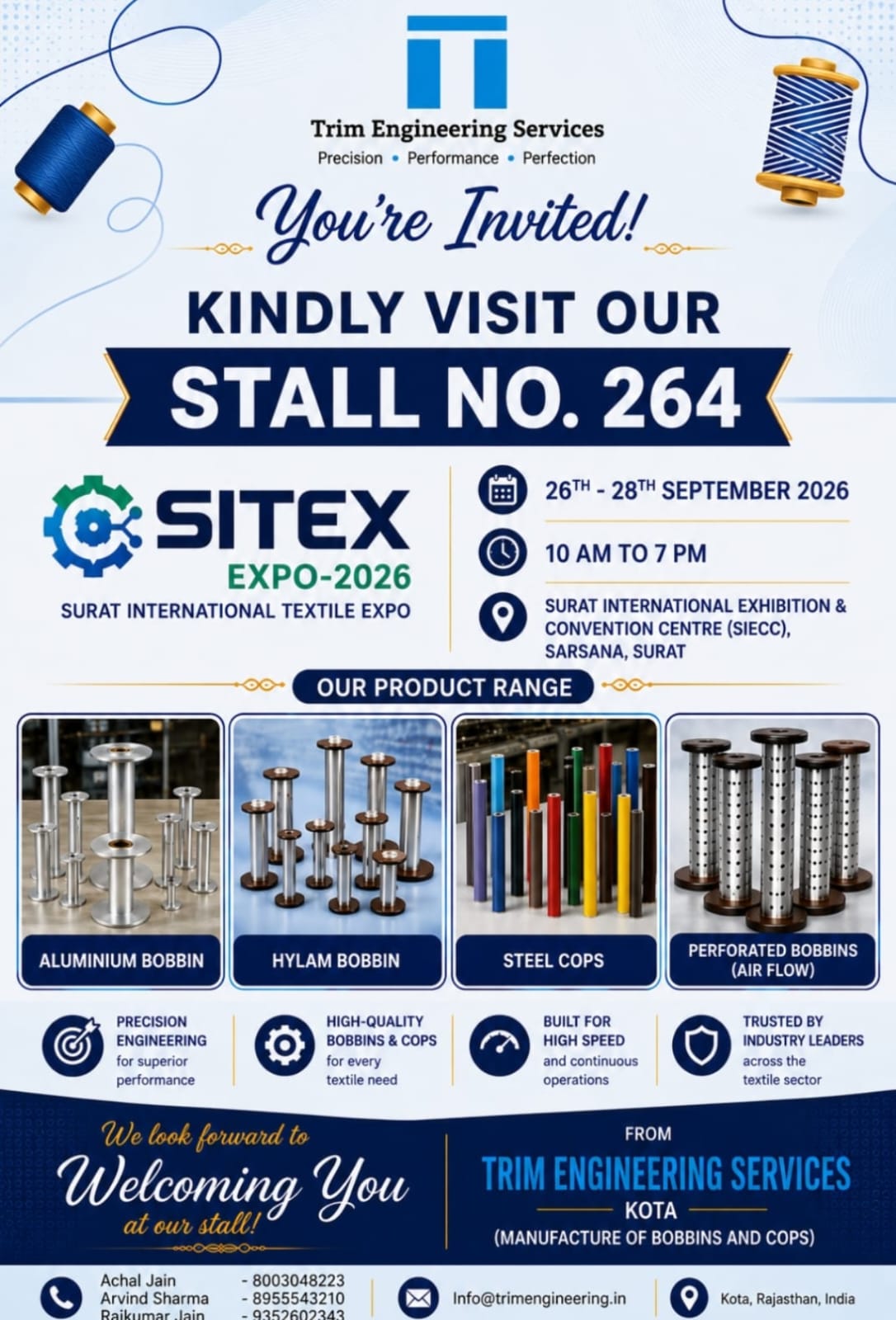
Bobbins play a vital role in maintaining yarn tension, ensuring winding quality, and facilitating efficient textile production. By understanding each phase of the bobbin lifecycle, manufacturers can make well-informed choices that boost productivity, minimize downtime, and uphold consistent product quality. Regular inspections, appropriate maintenance, and timely replacements are crucial for maximizing the value of these indispensable components. In high-performance textile settings, where precision and reliability are essential, effectively managing the lifecycle of bobbins is not just a good practice; it is a strategic imperative. For manufacturers looking to improve reliability and extend bobbin lifespan, partnering with an experienced BOBBIN manufacturer in India like Trim Engineering ensures access to precision-engineered solutions, including flange, perforated, and customized bobbins designed to meet specific machine requirements and demanding textile applications.