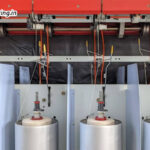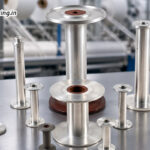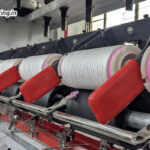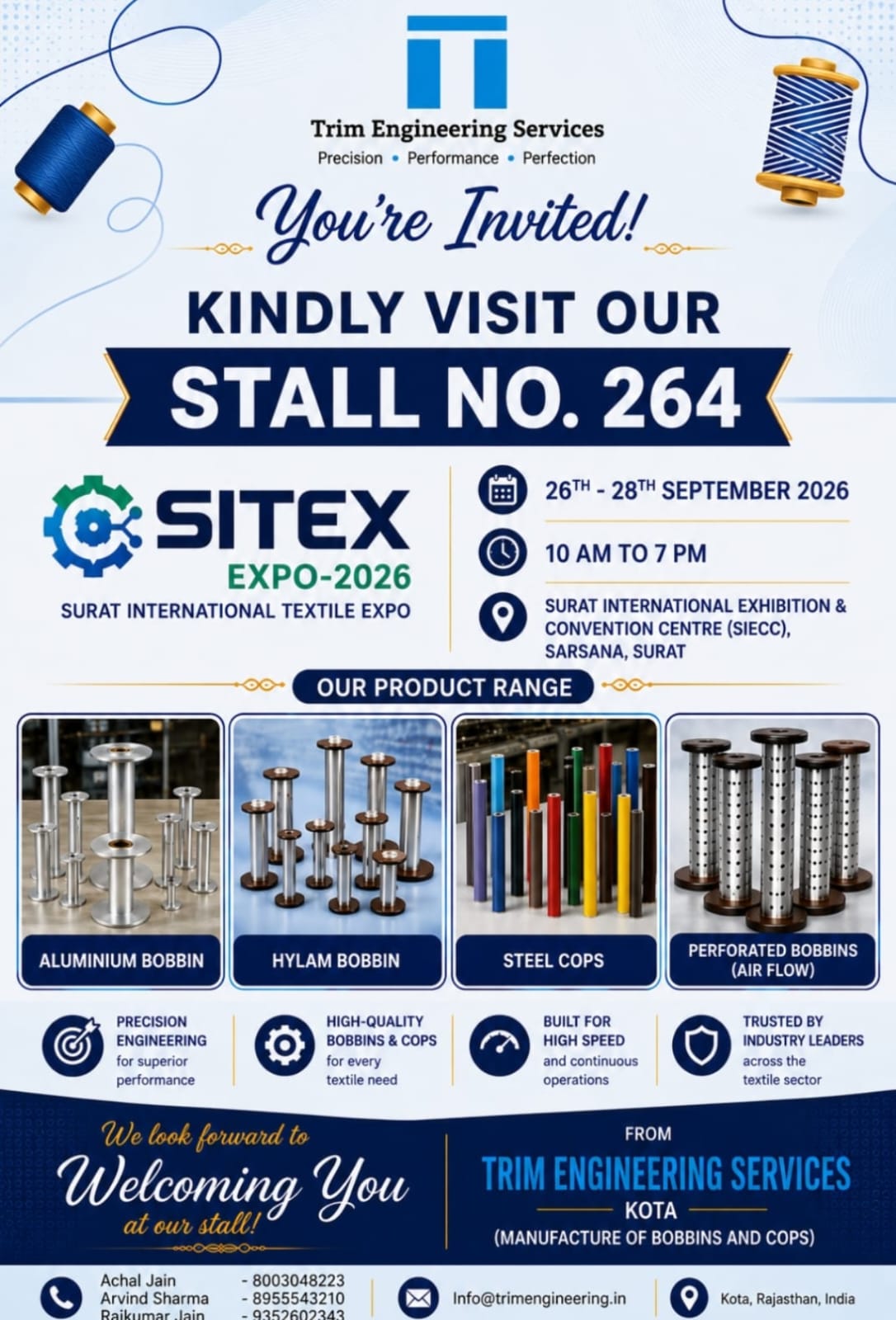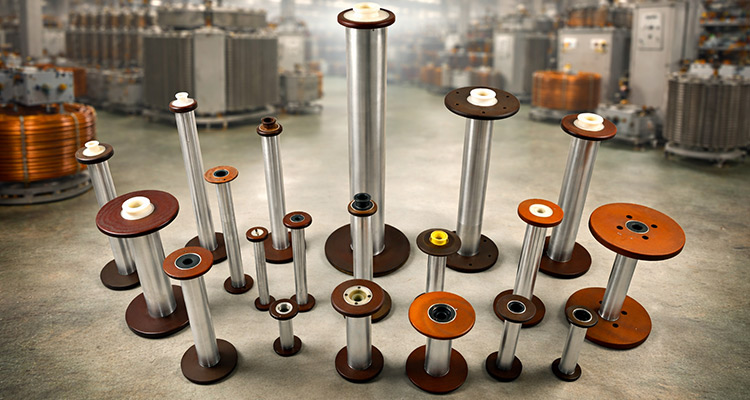
Bobbins are one of the most important, yet often overlooked, components in the winding machines of the textile production industry. Bobbins play a critical role in ensuring smooth, efficient, and consistent winding in textile production. The type and material of a bobbin directly influence yarn tension, winding speed, durability, and machine compatibility. Choosing the right bobbin helps reduce yarn breakage, improves production efficiency, and ensures consistent yarn quality across high-speed textile operations. Let us explore in the blow below the different types of industrial bobbins used in textile production, along with the materials they are made from, to understand how each variation supports specific machinery requirements, yarn characteristics, and performance demands in modern textile manufacturing.
Understanding the bobbin
A bobbin is a spindle-like cylindrical component around which a yarn or thread is wound. However, that doesn’t mean that bobbins are simply yarn holders; rather, they are also precision fixtures that influence the speed, tension, and consistency in yarn handling. Industrial bobbins are significantly larger than those used in a sewing machine. They are much stronger and more precisely balanced to work at high speeds on machines like twisters, doublers, rope makers, and cable yarn winders. In industrial textile environments, even minor imbalances or material inconsistencies in a bobbin can lead to vibration, yarn breakage, uneven winding, and machine downtime. This makes the design, material selection, and dimensional accuracy of industrial bobbins critical for maintaining productivity, operational stability, and consistent yarn quality during continuous, high-speed production cycles.
Different types of industrial bobbins
Industrial bobbins are available in multiple designs, each engineered to meet specific winding requirements, machine configurations, and yarn characteristics, ensuring optimal performance, stability, and efficiency across different stages of textile manufacturing.
- Flange bobbins
Flange bobbins are cylindrical packages with raised rims or flanges that keep the yarn neatly in place during winding and unwinding, preventing slippage off the sides. These bobbins are used in yarn twisting machines, doubling and twisting lines, rope and cable yarn machines, and spinning preparatory operations. With parallel winding maintained and slippage opportunities eliminated, flange bobbins ensure that the yarn stays organized, avoiding tangles and breakage.
- Double flange bobbins
Double flange bobbins have flanges on both ends of the cylinder, creating a symmetrical profile that supports the yarn on both the sides. This design is particularly useful for yarn packages that need to be stable and balanced under high tension, such as in high-productivity twisters, braiding setups, and rope yarn industries. Double flange bobbins remain highly stable at elevated machine speeds, providing excellent containment and support for the yarn, while reducing the risk of wandering and collapse. These bobbins are the backbone of many continuous, high-load textile processes as they distribute forces more evenly and provide greater dimensional rigidity.
- Perforated bobbins
Perforated bobbins have holes or perforations in the barrel, which not only reduces the mass of the bobbin, but also improves air circulation, and enables faster drying or heat dissipation during processes like dyeing or steam treatments. This typical feature makes perforated bobbins ideal for yarn twisting operations that involve heat or moisture, processes where the yarn needs quick drying, and in machines requiring lightweight bobbins for higher speeds. Perforated bobbins strike an excellent balance between strength and agility, especially in heat-sensitive processes where yarn quality can be affected by prolonged exposure to heat or moisture.
Why industrial bobbin material selection matters
The material from which a bobbin is made has a direct impact on its durability, performance, and cost effectiveness. The right material choice depends on the type of textile process, machine speed, and environment. Here’s a breakdown of the most commonly used materials.
- Nylon
Nylon is a strong synthetic polymer known for its high impact resistance, flexibility, and good wear properties, making it a go-to material for many textile bobbins. Nylon bobbins are light in weight, yet tough, and have excellent resistance to abrasion, while maintaining good dimensional stability at varied machine speeds. These bobbins are best suited for high-speed twisting and doubling, general synthetic yarn handling, and in applications where resilience to mechanical impact is essential.
- Phenolic
Phenolic materials are thermosetting resins known for their rigidity, heat resistance, and ability to withstand mechanical stress. Phenolic bobbins are thus strong and rigid, and possess high heat tolerance and great dimensional stability, making them best suited for industrial machines running at high speeds, situations where minimal deformation is critical, and in applications with heat generation due to friction. Phenolic bobbins balance stiffness with toughness, maintaining shape and performance even under intense operational conditions.
- Plastic
Plastic is a lightweight, cost-effective material that can be easily moulded. Plastic bobbins are widely used because they offer a balance of cost and performance, while being relatively easy to produce in many configurations. They are best suited for mid-range textile machines, processes where low weight is beneficial, and in applications with moderate mechanical stress.
Choosing the right bobbin for your operation
With so many types and material options available, it is crucial to be able to find the right kind of bobbin for your particular application and requirements. There are a number of factors to consider to be able to make the right choice.
- Machine type and speed: High-speed winding machines demand lightweight, dynamically balanced bobbins like nylon, which reduce rotational stress, minimize vibration, and support stable, consistent performance in textile operations.
- Yarn type and denier: Coarser yarns, high-denier filaments, or specialty fibres require stiffer, high-strength materials like phenolic to maintain dimensional stability, prevent deformation, and ensure uniform tension control throughout winding.
- Production conditions: Manufacturing environments involving heat buildup, moisture exposure, or extended operating cycles benefit from perforated designs or thermally stable bobbins that improve airflow, resist warping, and maintain performance consistency.
- Cost vs. performance: The selection of bobbin material should align with production intensity and usage cycles. While plastic suits lighter, short-run operations, phenolic is preferred where strength, wear resistance, and dimensional consistency are critical over extended use.
Industrial bobbins play a decisive role in textile productivity and yarn quality. Selecting the right bobbin ensures smoother operation, reduced downtime, and consistent performance, making it a vital component in efficient, high-speed, and reliable textile manufacturing. When choosing a supplier, partnering with an experienced bobbin manufacturer, one that offers expertise across materials and designs, along with custom solutions for specific machines and yarn types, can significantly enhance operational reliability and output quality. Trim Engineering is a trusted BOBBIN manufacturer in India, known for delivering precision-engineered industrial bobbins designed for high-speed textile operations. With deep expertise across bobbin types and materials, Trim Engineering offers reliable, custom-built solutions that enhance machine performance, yarn consistency, and long-term operational efficiency.