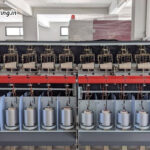
In textile manufacturing, yarn quality is often judged by uniformity, smoothness, and consistency. But, behind every perfectly wound package lies a network of tiny components that work quietly to bring out the results. The “cop” is one such component that plats a critical role in the entire system of yarn winding operations. From managing yarn tension to supporting high-speed windings, cops influence how a yarn is formed, and how consistently quality standards are met. Understanding what cops are, and how they affect winding quality and efficiency, is essential for anyone involved in yarn production, which is just what this blog will do.
Understanding cops
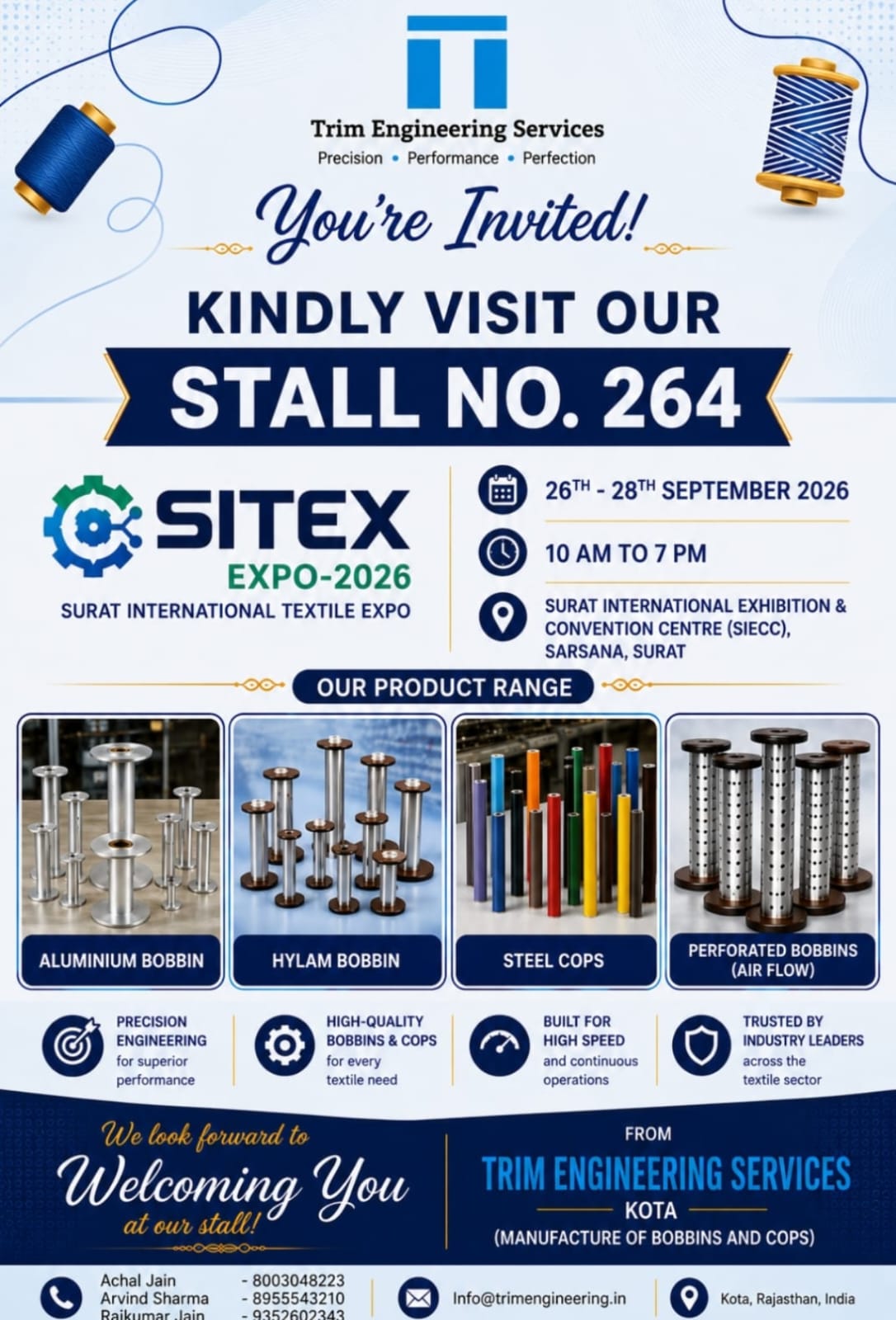
A cop is a cylindrical or conical tube around which yarn is wound in a controlled manner, forming a compact package that can be easily handled and transported. The geometry, material, and surface finish of the cop directly affect how the yarn is wound, how evenly the tension is distributed, and how stable the final package remains during high-speed operation. Cops can maintain dimensional accuracy and strength throughout repeated cycles of winding and unwinding, making them an integral component in the yarn winding operation. In industrial textile processes, the use of well-engineered cops helps reduce yarn breakage, improve machine efficiency, and ensure uniform package formation. Their consistent performance plays a key role in maintaining overall yarn quality and downstream processing reliability.
How cops work
The yarn, during winding, passes through guides and tensioning devices before being laid onto the rotating cop. And, as the cop spins, the yarn is rolled layer by layer over it in a precise pattern. For this process to remain stable, the cop is required to rotate without wobble, withstanding centrifugal forces at high speeds. Also, the surface of the cop should allow controlled yarn grip without abrasion. Any inconsistency in the cop can disrupt the winding, leading to uneven packages or yarn damage. This is why it is important to purchase cops from trusted manufacturers who can design cops to integrate seamlessly with winding machine spindles and automation systems. Trim Engineering stands out as a leading COPS manufacturer in India, delivering precision-engineered cops designed for high-speed yarn winding applications. With a focus on dimensional accuracy, durability, and machine compatibility, Trim Engineering ensures seamless integration with modern winding systems and consistent yarn quality across textile operations.
Why cops are essential to yarn quality
Yarn quality is not defined by the thread properties alone, but also by how the yarn is handled during winding. Consistent tension is vital during winding, as variations in tension can cause uneven yarn density, weak spots in the yarn structure, and increased breakage during downstream processing. Cops help maintain uniform yarn tension by providing a uniform winding surface and consistent diameter. This allows the yarn to be laid evenly from start to finish, reducing internal stress within the package. Moreover, an evenly built package ensures smooth unwinding later; if the yarn layers are uneven, it can lead to snarling or slippage. But, with cops, the yarn build is symmetrical, supporting controlled unwinding, and minimizing disruptions in subsequent processes such as weaving, knitting, or further winding.
Why cops are essential to winding efficiency
Winding efficiency is closely tied to machine speed, stability, and consistency; and the cop design directly affects all these factors. The shape of the cop determines how yarn layers stack; even slight dimensional variations can result in poor yarn distribution or package instability at high speeds. Precision-engineered cops ensure smooth rotation with vibration and reduced machine stress, thus allowing winding machines to operate at higher speeds without sacrificing quality. Also, the controlled surface finish of the cop ensures secure yarn placement, minimal abrasion, and consistent winding tension, because a too-smooth surface can cause slippage, while a rough surface can damage the yarn. Such a controlled surface finish with a balance between grip and smoothness is especially important for fine or high-tenacity yarns, where surface interaction plays a major role in final quality.
Over time, high-quality cops can improve consistency and reduce yarn wastage, resulting in better production. This is why cops deserve more attention in yarn manufacturing. Cops influence nearly every aspect of winding performance – from tension control and speed, to package stability and yarn integrity. When cops are designed and selected with precision, they become enablers of efficiency rather than sources of risk. They allow winding machines to operate at their full potential while safeguarding yarn quality at every stage. In an industry where margins are tight and quality expectations are high, understanding and optimizing components like cops can make a significant difference.