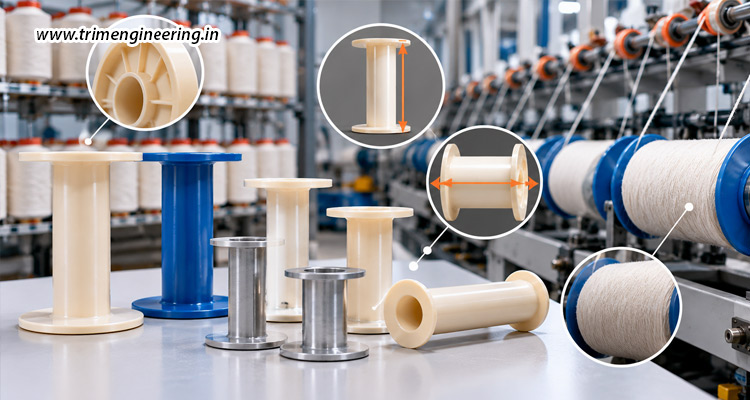
The quality of twisted yarn is shaped by many elements, such as yarn properties, twisting settings, equipment capabilities, and winding circumstances. Bobbin design stands out as particularly significant because it serves as the foundation and framework upon which yarn gets wound throughout manufacturing. The way it’s shaped, sized, and built directly affects how the yarn package forms, stays secure, and releases during later stages. If bobbin specifications don’t match the intended use, producers might face problems like uneven winding patterns, unstable yarn packages, or challenges when handling yarn. By learning how bobbin design and dimensions connect to yarn outcomes, manufacturers can keep their winding processes steady and guarantee dependable twisted yarn results for a wide range of textile needs.
How bobbin design influences yarn package formation
The way a bobbin is designed plays a key role in determining how well yarn gets wound and held steady during production. The bobbin’s shape, surface texture, and overall structure all affect how the yarn package forms and stays stable. When the bobbin design matches what the twisting machine needs and suits the specific yarn type, it creates the perfect base for neat, organized winding. If the design isn’t quite right, trouble might arise in keeping the package shape intact or spreading the yarn evenly across the winding space. These problems can make handling trickier and cause unwinding to become unpredictable later on. That’s why the bobbin needs to hold the yarn comfortably without squeezing it or affecting how stable the package is. Design choices really matter when running continuous production, since packages need to handle repeated use and additional processing steps without issues. A well-designed bobbin makes winding more controlled and helps keep package characteristics consistent, which means more predictable results will be achieved when processing twisted yarn.
How bobbin diameter and length shape the winding process
The size of a bobbin – both its diameter and length – plays a crucial role in determining how much space is available for winding yarn and what the finished package will look like. The diameter creates the circular winding surface around the bobbin, while the length gives the usable width for building up the yarn package. It’s important that both measurements work well with the twisting process and match the machine’s requirements. When dimensions don’t fit the requirements, yarn distribution across the winding area can suffer. A bobbin with the wrong diameter might limit how much yarn can be wound and affect how the yarn behaves during winding, while a length that’s too short or too long can create real challenges when forming the package. These issues can make yarn handling trickier during the steps that come after winding. Choosing the right dimensions helps keep winding conditions consistent from one production batch to the next. The goal is to create enough winding space while keeping the package stable and making sure everything works smoothly with the equipment. When bobbin dimensions are properly matched, faster, more efficient yarn handling can be achieved while keeping the package exactly as intended.
How flange design keeps the yarn package stable and secure
Flanges play a key role in keeping the yarn package contained and centred in the right winding area. The way they’re sized, shaped, and arranged directly affects how well the yarn stays put during both winding and handling. When working with twisted yarn, a well-designed flange system really helps keep the package stable and prevents yarn from wandering outside the designated winding zone. The flange proportions need to work well with the bobbin body, the yarn being used, and what the package needs to accomplish. If the wrong configuration is selected, trouble can arise in controlling how the yarn distributes, which can affect how the package forms and later unwinds smoothly. That said, flanges aren’t the whole story – machine settings, yarn tension, and winding patterns matter just as much. When the flange dimensions are selected correctly for a specific job, they provide the containment needed for neat, organized packages. By considering flange shape together with bobbin diameter and length, winding needs can be addressed through one complete, unified design approach.
Keeping bobbin dimensions steady for reliable winding performance
When manufacturers want to keep their winding conditions the same across many production runs, having consistent bobbin dimensions really matters. If the diameter, length, flange dimensions, or mounting features vary, it can change how well the bobbin fits the machine and how the yarn package forms. Even tiny differences can make a big impact, depending on what the equipment can handle and what the specific application needs. Getting dimensions right helps make sure bobbins work the way they’re supposed to when mounted and used. It also keeps things predictable when packages are made with the same machine settings and yarn types. This becomes especially important in busy production settings where keeping packages uniform helps everything run smoothly downstream. Manufacturers should think carefully about the tolerances needed, how well the bobbin is built, and whether it’ll work with the equipment. Keeping bobbin dimensions consistent helps avoid unnecessary changes in winding conditions and makes sure packages form reliably, batch after batch. For textile manufacturers seeking dependable bobbins for yarn twisting applications, Trim Engineering offers bobbin solutions suited to specific production requirements. As a bobbin for twisted yarn manufacturer in India, the company caters to the industry’s need for suitable bobbin designs and dimensions for consistent winding operations.
The way bobbins are designed and sized really matters for getting great twisted yarn! They affect how the yarn gets wound up, held in place, and readied for the next steps. Things like the overall shape, how wide it is, how long it is, the flange setup, and how precise the measurements are all play a role in creating solid packages and keeping the winding nice and even. It’s important that these features match up well with the specific yarn type, the twisting method being used, and what the machine needs to work properly. While a bobbin design by itself won’t make or break the final yarn quality, picking the right one definitely gives a solid starting point for winding that stays under control and creates stable packages. When all these pieces are considered together, the consistency of yarn handling can be improved, making twisted yarn production way more reliable, no matter what textile projects are being undertaken.